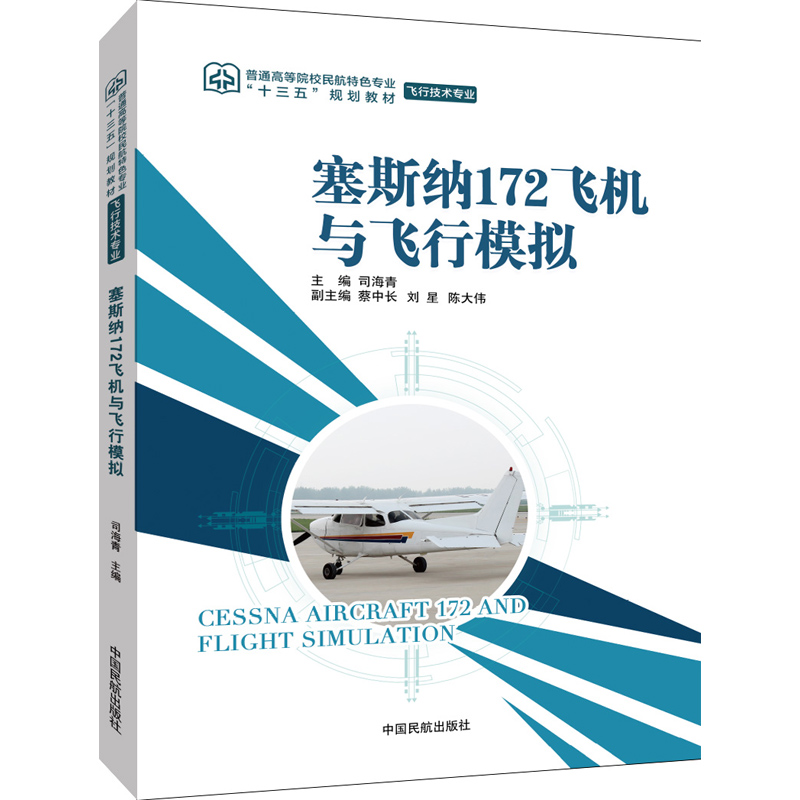
本书涵盖了塞斯纳172飞机的基本结构,操纵系统和动力装置,通信、电气、仪表和导航系统,航空气象,机场运行与空中交通,基本飞行原理等基础理论知识。在此基础上,介绍了基于塞斯纳172飞机的飞行模拟实践教学平台及其相应的飞行实验课程。

本书编者多年来一直致力于基于性能导航(PBN)等航行新技术的研究和培训工作,在PBN程序设计和运行中取得了一些研究成果,在日常给运行人员做PBN培训中积累了一些经验,遂在此基础之上结合PBN的发展动态编著了本书。对PBN概念的原理、各类导航规范的程序设计方法、航空公司运行PBN中需要关注的问题进行详细介绍。

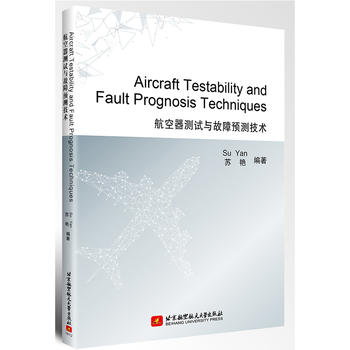
In this book, the complete theory systems and frameworks of aircrafttestability and fault prognosis techniques are established.The commontestability design analysis, fault diagnosis and prognosis methods of aircraftare introduced comprehensively. The objects of the book are to stand out thecharacteristics of aviation, to pursue comprehensive and detailed content, andto emphasize the combination of theory and application.
In the aspect of theory, the advanced theories and techniques includingsignal analysis, multi瞫ignal modeling, test strategy optimization, sensor placement andsensing strategies,fault diagnosis methods, fault prognosis techniques and soon, which are involved in aircraft testability and fault prognosis, are allintroduced in detail. In this book, aircraft testability and fault prognosistechniques include: testability modeling and analysis for aircraft system faultdiagnosis and prognosis, vibration monitoring and fault diagnosis for aero瞖ngine, trend analysis of aero瞖ngine, andnondestructive testing of aircraft structure. In this book, many diagnosiscases are arranged in order to make theory to combine practice.
The book can be acted as the teaching material for senior aircraftmaintenance majors, and reference book for postgraduate and technician of thismajor and related majors.
Abstract
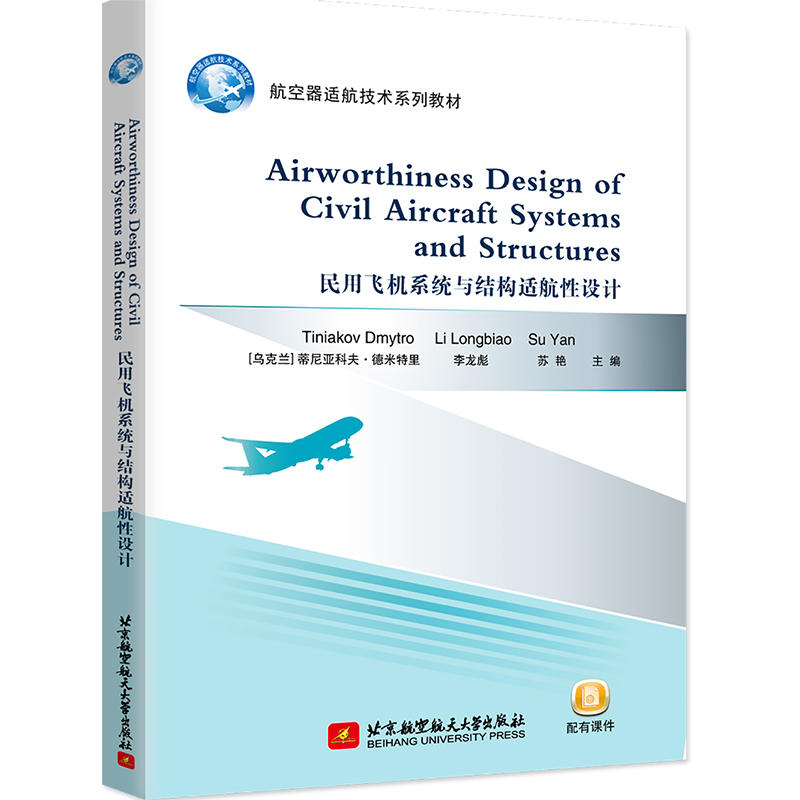
Thisbook is intended to explain the purposes and general structures of the mainmembers and systems of airplanes, to analyze the characteristics and thestructural features of aircrafts, with accordance to airworthinessrequirements. Also it is intended to describe the methodology for the designingand modifying of aircrafts, their units and systems, assembly units, withaccordance to the requirements of airworthiness regulations. And it is intendedto describe the purpose, layout and principal diagrams, operation and basicparameters, structure of assemblies and elements of systems of aircraft powerplants with accordance to airworthiness. The emphasis is put on the operationof systems of aircraft power plants.
Itis shown that the classification of aircraft by aerodynamic configuration, amain units structure (as wing, fuselage, tail unit, landing gear, etc.),general requirements to the units, the airworthiness requirements to units, thegeometrical parameters of the units, advantages and disadvantages of differentunits configurations, load carry structures of units, structural members ofunits, etc.. And it is shown that the functionality, design features,arrangement, operational principles, methods of equipment design of aircraftpower plant systems, which meet both general and specific requirements. Theoperation,structure design of aircraft power plant systems (engine selection,engine mount, systems: fuel, lubrication, air ingestion, exhaust, protection, electromechanical, etc.) are presented in interaction with other components andsystems of airplane.
Thisbook will be suitable for students majoring in airworthiness, designers,manufacturing engineers, etc.
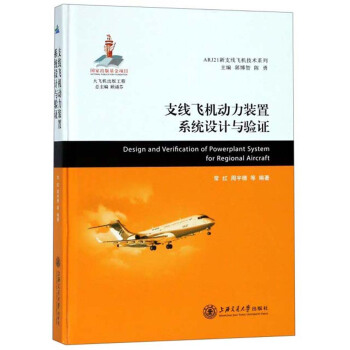
《支线飞机动力装置系统设计与验证/ARJ21新支线飞机技术系列》动力装置系统包含支线飞机动力装置、燃油系统、防火系统和辅助动力装置(APU)系统以及全机防火的设计和验证技术。简而言之,动力装置的设计应表明在各种飞机可能的工况下,可为飞机提供所需正反推力。燃油系统的设计应表明在各种可能工况下,可为发动机提供持续压力和流量的燃油。防火系统的设计应表明在预期的过热、烟雾或着火灾害下,可为飞机防护区域提供有效告警和灭火措施。辅助动力装置系统的设计应表明在预期工作包线范围内,可为飞机提供所需电源、气源,为发动机提供引气。
《支线飞机动力装置系统设计与验证/ARJ21新支线飞机技术系列》阐述了这4个系统在型号验证过程的设计考虑、适航条款要求和符合性验证方法,并对设计和验证过程中的关键技术和创新点进行了归纳和总结。
《支线飞机动力装置系统设计与验证/ARJ21新支线飞机技术系列》可供高等院校、科研院所以及从事民用飞机设计行业的科技工作者与工程技术人员使用,也可供民用飞机研制兴趣爱好者参考。